// op_009 — case study In Dev
Shield AI
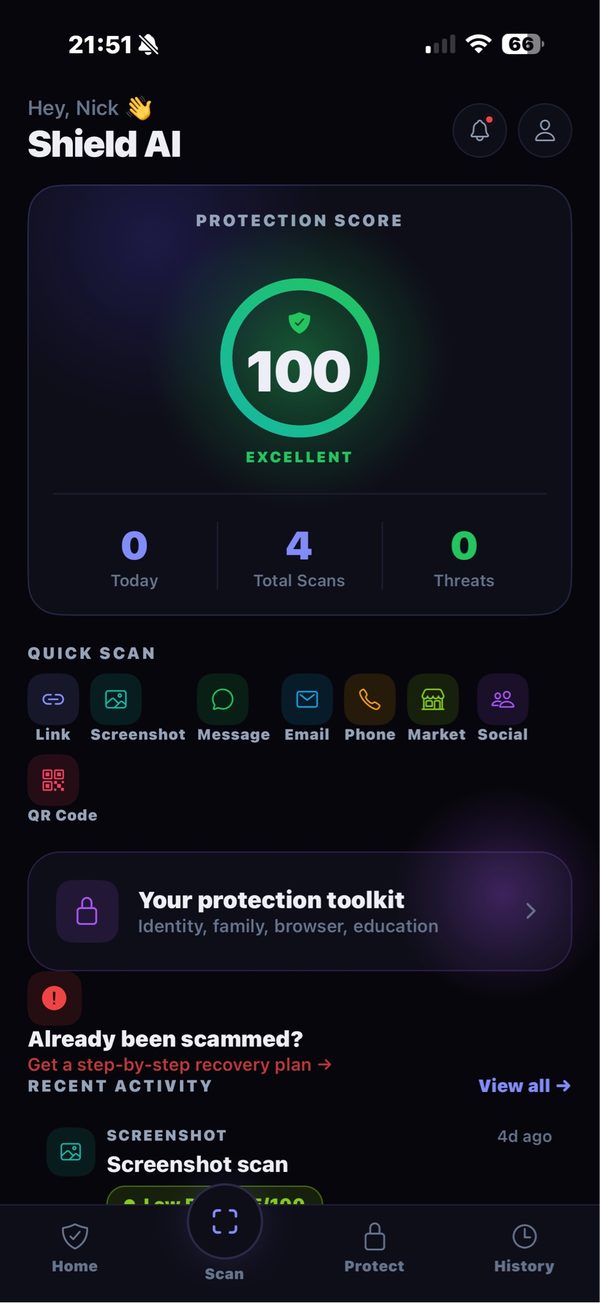
// the problem
By the time someone suspects a text, link, or screenshot is a scam, they've usually already searched the brand name and read three contradictory forum posts. What's missing is a single place to drop the suspicious thing and get a clear risk score and next step — before clicking, paying, or trusting it — instead of after the damage is done.
// architecture decisions
Layered Detection
Deterministic rule checks — suspicious TLDs, URL shorteners, brand mismatches, credential prompts — run first. Claude-powered LLM analysis interprets the evidence second, so no single layer is a point of failure.
Input Pipeline
Screenshot OCR and brand/entity detection extract text and identify spoofed brands directly from an image, while URL scanning layers Safe Browsing with WHOIS enrichment for domain-age and registrar signals.
Async Processing
Redis + Celery queue the analysis pipeline so the mobile client gets a fast acknowledgment while OCR, scanning, and LLM analysis run in the background without blocking the UI.
Report Engine
A structured AI report engine converts raw detection signals into a risk score, threat class, plain-English explanation, and concrete next steps — not just a "this looks suspicious" flag.
// key outcomes
Phase 1 MVP covers the core loop — submit, scan, score, explain — with auth, dashboard, scan history, and a feedback loop already in scope for the first release. The roadmap layers in QR scanning, message/email analysis, phone reputation lookup, iOS/Android share extensions, identity breach monitoring, and a guided scam-recovery wizard.
// have an app to harden?
Security products carry their own trust burden. If your application handles accounts, links, screenshots, payments, or sensitive data, start with a practical review of the paths attackers target first.
// related builds